Ph.D. in Transdisciplinary Health, Sciences and Technology
Contact Information
Mailing Address
Cleveland State University
PhD in THST
2121 Euclid Avenue, CH 102
Cleveland, OH 44115
Campus Location
College of Health
2501 Euclid Avenue, CH 101
Cleveland, OH 44115
Phone: (216) 687-3554
Faculty for the PhD in THST program
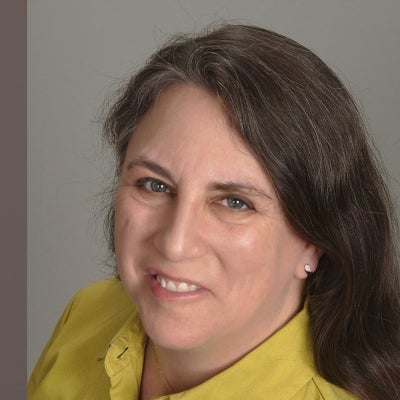
Debbie Espy, PT, Ph.D. (she/her)
Dr. Espy has more than 30 years of experience as a physical therapist. She practiced as a clinician for 18 years in acute care, inpatient and outpatient neurorehabilitation, assistive technology, and geriatrics. Her areas of expertise include motor control and learning, postural control, balance training, assistive technology, and neurorehabilitation. Throughout her career, she has been actively involved in research, particularly in the efficacy, intensity, and dosing of balance training interventions, fall prevention/fall resistance, the therapeutic use of video gaming and virtual reality, gait biomechanics, and sensors to improve exercise and physical activity. She collaborates locally, nationally, and internationally and has published in professional journals across disciplines. She is or has been supported by grants from organizations like the American Heart Association, the Ohio Bureau of Workers’ Compensation, the National Institutes of Health, and the National Science Foundation.
Her personal journey from the clinic to academia was facilitated by a Ph.D. program that was both rigorous and flexible, allowing her to pursue high-caliber research aligned with her clinical interests. She also benefited from the opportunity to gain teaching experience during her Ph.D. studies. Throughout her academic and research career, she has realized the importance of effective collaboration across disciplines. These experiences and realizations have informed the focus and design of the Transdisciplinary Health Science and Technology Ph.D. program. She is excited to work with other health professionals as they move towards advancing their careers and amplifying their positive impact on the world. She welcomes research mentoring especially in any of the following areas: motor learning, knowledge translation, postural control, balance training, fall prevention, exercise dosage, therapeutic aspects of video gaming and virtual reality, and the use of sensor technologies to provide exercise and motor learning feedback.
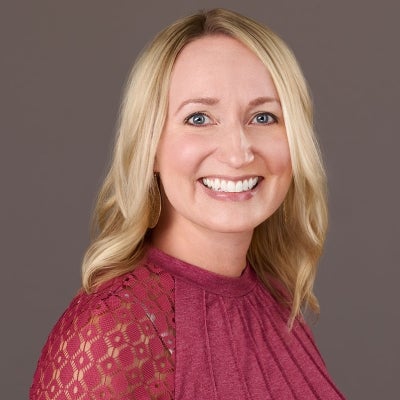
Dr. Kelle DeBoth Foust, OTR/L, Ph.D. (she/her)
Dr. Kelle DeBoth Foust, OTR/L, Ph.D. (she/her) is an Associate Professor in the Occupational Therapy Program at Cleveland State University. Dr. Foust has worked in school, home, and community settings, specializing in children with autism and sensory processing disorders. Her research focuses on sensory processing in autism, interprofessional education, community-engaged research in under-resourced communities, mental health and building resilience related to trauma in children and families, and technological applications to facilitate engagement for children with disabilities. Her work has been supported by over $2.5 million in external funding from organizations such as the National Science Foundation, the American Occupational Therapy Foundation, and the Public Interest Technology-University Network. Through her roles as Managing Director of the CSU TECH Hub, Academic Director of the Internet of Things Collaborative, Co-Founder of PLAAY on the Move, and Co-Director of the Ph.D. in Transdisciplinary Health, Sciences and Technology program at CSU, Dr. Foust remains deeply committed to leveraging technology to enhance accessibility and improve healthcare outcomes for individuals with disabilities, sensory processing differences, and motor impairments.
Dr. Foust is particularly eager to work with students in any of the following areas: using technology, such as AI software and motion capture, to explore objective measurements of participation especially in natural play environments, creative uses of technology to support social emotional learning, exploring interventions for ACEs/trauma in under-resourced communities, and examining ways that technology can improve the lives of children with developmental disabilities such as autism.

Andrew Lammers, PhD (he/his)
Professional Background
Andy Lammers has 20 years of experience teaching physiology, anatomy, and research in health sciences at Cleveland State University. His research background includes work in locomotor biomechanics in mammals, and the biomechanics and neurological control of feeding and swallowing.
Research Interests and Contributions
Dr. Lammers’ research focuses on biomechanics of locomotion and stability, especially in small quadrupedal mammals. He has investigated the impact of substrate (i.e., terrestrial versus arboreal, sloped vs flat, straight trackway vs a trackway with a bend) More recently, Dr. Lammers focuses on effects of mass distribution on locomotion and stability. For example, how are movements and stability affected by increasing the mass of the limbs or tail? His work has been supported by Cleveland State University’s internal funding, and he has published in Journal of Experimental Biology, Journal of Biomechanics, Journal of Experimental Zoology, and others. He collaborates with students and sometimes with colleagues at CSU and other universities.
Student & Collaborative Opportunities
Dr. Lammers is eager to mentor students and collaborate with research partners in areas including:
- Biomechanics of locomotion in small mammals or humans
- Swallowing and feeding mechanics
- Stability and balance
Aviva Vincent, PhD, LSW (she/her)
Professional Background
Dr. Aviva Vincent is an experienced social worker specializing in Veterinary Social Work—the intersection of human and animal relationships. Their professional background spans Equine Assisted Services (including Equine Assisted Learning, Equine Facilitated Psychotherapy, and adaptive riding) to community-based practice as a program director and community organizer. Dr. Vincent’s areas of expertise include Equine Assisted Services, Animal Assisted Interventions, and the link between interpersonal violence and animal abuse. Beyond the practice of human–animal interaction, Dr. Vincent has extensive experience in community practice focused on educational equity, advocacy, and diversity, equity, and inclusion (DEI) education and training. They facilitate strategic planning processes for organizations and community leaders seeking to design and launch new programs, evaluate outcomes, and transition from program evaluation to applied research.
Research Interests and Contributions
Dr. Vincent’s research centers on Veterinary Social Work, exploring the intersection of human and animal well-being. Their studies examine the physiological impact of the human–animal bond and the effectiveness of animal-assisted interventions. As a mixed-methods researcher, Dr. Vincent integrates both qualitative and biological measures, including salivary analysis to assess stress (e.g., cortisol) and affiliative bonding (e.g., oxytocin). Their work has been published in leading interdisciplinary journals such as Journal of Veterinary Medical Education, Animals, Anthrozoös, Human–Animal Interaction, Journal of Social Work and Mental Health, Veterinary Sciences, Child and Adolescent Social Work Journal, and Complementary Therapies in Clinical Practice. Dr. Vincent actively collaborates with local organizations, national associations (e.g., NASW, PATH Intl), and international partners (e.g., IAVSW). They are currently co-editing a volume with NASW Press that highlights diversity, equity, and inclusion practices within Veterinary Social Work.
Leadership and Innovation
Through roles such as leading the Veterinary Social Work certificate program at Cleveland State University, Dr. Vincent has demonstrated a commitment to the teaching and training of prospective students, in addition to research efforts in the field. She is a resource to the community for program design and evaluation, which contributes to the growth of the Veterinary Social Work field. Her work is innovative beyond the scope of the field in that she is consistently
seeking new methodologies to assess effort in a meaningful way. Most recently, she developed a working collaboration with the David H. Braff Animal Law Center at Cleveland State University, to pool resources and engage in a deeper, cross-disciplinary understanding of The Link between interpersonal violence and animal abuse.
Student & Collaborative Opportunities
Dr. Vincent is eager to mentor students and collaborate with research partners in areas including:
- The Link between interpersonal violence and animal abuse: impact of state/federal policy on practitioner’s work in the field, developing a typology of those who engage in “The Link” by exploring characteristics and behaviors of those who engage in animal abuse
- Equine Assisted Services: Outcome of an Equine Assisted Learning program Reining In (https://www.reiningin.org/home/reining-in-anxiety), DEI practices within education and training spaces, Outcome evaluation of an Equine Facilitated Psychotherapy program (for specific populations)
- Veterinary Social Work: growth and sustainability of the practice field
Carol A. Olszewski, Ph.D., MT-BC (she/her)
Professional Background
Dr. Olszewski is an experienced board-certified music therapist and Associate Professor of Music Therapy. She has extensive clinical and research experience, working with a variety of populations as a practicing music therapist and as a research scientist in the Department of Otolaryngology at the University of Iowa. Her expertise includes adult learning and development, competency-based evaluation, music perception, and faculty socialization within higher education.
Research Interests and Contributions
Her research explores competency-based evaluation, instructor characteristics on learner outcomes, undergraduate music therapy program equivalency, and the development and training of clinician professors. She has also studied neural processing of individual music elements through typical and atypical hearing mechanisms, including NIH-funded work on music perception with cochlear implants. Her work has been published in journals such as Ear and Hearing, The Journal of Music Therapy, and Otology & Neurotology.
Leadership and Innovation
Through her service on the Continuing Education Committee of the Certification Board for Music Therapists and the Academic Approval Committee of the American Music Therapy Association, Dr. Olszewski contributes to advancing standards in music therapy education and clinical practice. She also brings leadership to faculty development and assessment through her university service and her work supporting the structure of the academy.
Student & Collaborative Opportunities
Dr. Olszewski is eager to mentor students and collaborate with research partners in areas including:
- Competency-based evaluation and assessment in education
- Instructor characteristics and their impact on learning
- Adult learning and faculty development
- Music perception and cochlear implants
- Educational training of clinician professors
- Structure and socialization within higher education
Deborah L. Layman, Ph.D., LPMT, MT-BC (she/her)
Professional Background
Dr. Layman is an experienced board-certified music therapist, specializing in clinical work with children, adolescents, and young adults. Her professional background includes leadership in music therapy education, private practice, and program development. Areas of expertise include the therapeutic function of music, music therapy with trauma and neurodevelopmental populations, competency-based education, supervision, and clinical program leadership.
Research Interests and Contributions
Her research focuses on advancing music therapy education and clinical practice, with emphasis on self-regulated learning, reflective practice, goal setting, flipped learning, and competency-based supervision. She has also investigated collaborative treatment approaches, complex trauma, neurological issues, and the management of sleep and stress. Dr. Layman has published in leading journals such as the Journal of Music Therapy and Music Therapy Perspectives, and serves as Associate Editor for Music Therapy Perspectives and an invited reviewer for other international journals.
Leadership and Innovation
Through her roles as Department Chair, program director, and national leadership positions with the Certification Board for Music Therapists (CBMT), Dr. Layman has advanced music therapy education, licensure advocacy, and clinical standards. She contributed to the development of the Scope of Practice tool for music therapy, and has played a pivotal role in legislative advocacy for music therapy licensure in Ohio.
Student & Collaborative Opportunities
Dr. Layman is eager to mentor students and collaborate with research partners in areas including:
- Therapeutic function of music
- Self-regulated learning and reflective practice
- Competency-based evaluation and supervision
- Flipped learning in higher education
- Music therapy for sleep, stress, and trauma
- Collaborative treatment models for communication and developmental disorders
Jenn Soros, Ph.D., MOT, OTR/L (she/her)
Dr. Soros is an experienced occupational therapist specializing in working with individuals with developmental disabilities. Her professional background includes work in school, home, and community settings since 2010. Areas of expertise include sexuality and intimacy, occupational science, assistive technology, and social participation.
Her research focuses on sexuality and intimacy, occupational justice, and occupational science. She has investigated the sexual activity of young adults with cerebral palsy, with particular interest in how occupational therapy can support participation in intimate and social occupations. Her work contributes to advancing knowledge in the areas of sexuality, assistive technology, and social inclusion for people with disabilities.
Through her work as co-host of the OT After Dark Podcast, Dr. Soros is committed to increasing awareness and dialogue around sexuality and intimacy in occupational therapy practice. She is dedicated to addressing inequities and expanding the scope of occupational therapy to include vital but often overlooked aspects of human occupation.
Dr. Soros is eager to mentor students and collaborate with research partners in areas including:
- Sexuality and intimacy
- Occupational science
- Occupational justice
- Assistive technology
- Social participation
Karen McIntyre, DPT., M.S., B.S. (she/her)
Professional Background
Dr. McIntyre is an experienced physical therapist and educator. Her professional background includes extensive work in acute care hospital environments across the lifespan, including adult, pediatric, and neonatal intensive care units, as well as outpatient pediatric and adult care. Areas of expertise include clinical education, professional issues in physical therapy, and the management of patients with multi-system dysfunction in acute hospital settings.
Research Interests and Contributions
Her research focuses on the scholarship of teaching and learning, with particular emphasis on clinical education processes and the student experience. She has investigated clinical placement networks, collaborative models of education, and the impact of perfectionism, imposter syndrome, and self-efficacy on Doctor of Physical Therapy (DPT) students. She is also interested in innovative teaching and learning methods, such as using visual arts to foster student reflection and simulation-based learning experiences. Dr. McIntyre actively collaborates at the state and national levels through the Ohio-Kentucky Consortium of Physical Therapy Programs, the Federation of State Boards of Physical Therapy, and the Physical Therapy Compact Commission.
Leadership and Innovation
Through her role as Director of Clinical Education (2011–2025) and as a Credentialed Trainer for the American Physical Therapy Association’s Clinical Instructor Program, Dr. McIntyre has advanced clinical education and strengthened professional development for physical therapy instructors. She has also served in leadership positions with the Ohio Occupational Therapy, Physical Therapy, and Athletic Trainers (OTPTAT) Board, the Federation of State Boards of Physical Therapy, and the Physical Therapy Compact Commission, where she contributes to regulatory innovation, compliance, and interstate collaboration.
Student & Collaborative Opportunities
Dr. McIntyre is eager to mentor students and collaborate with research partners in areas including:
- Clinical education processes and collaborative placement models
- DPT student experiences with perfectionism, impostor syndrome, and self-efficacy
- Simulation and innovative educational methodologies
- Scholarship of teaching and learning in health professions education
- Acute care practice and interprofessional education
- Professional regulation and clinical education policy development
Kim Fuller, Ph.D., LISW-S, CST (they/she)
Professional Background
Dr. Fuller is an experienced Associate Professor of social work and a clinician. They are a certified sex therapist working with individuals that are LGBTQ+, couples, and those who have sexual disorders.
Research Interests and Contributions
Their research focuses on improving the incorporation of medically accurate and informed content into sex education, building skills and supporting LGBTQ+ youth to become critical scholars, and LGBTQ+ pregnant and birthing experiences. They have received several foundation grants through Spencer, Viiv, and Gilead. They have been published in a wide range of sexuality focused journals including Archives of Sexual Behavior, Sexual & Relationship Therapy, and International Journal of Transgender Health.
Leadership and Innovation
Dr. Fuller is a leader in the mental health and sex therapy communities across Northeast Ohio and the greater state. Dr. Fuller is the treasurer of the Ohio Sexual Health Collaborative and is the owner of a mid-level group practice in Cleveland.
Student & Collaborative Opportunities
Dr. Fuller is eager to mentor students and collaborate with research partners in areas including:
- LGBTQ+ topics
- Sexual Health
- Social justice focuses
- Youth Empowerment
Kristen Pataki, OTD, OTR/L (she/her)
Professional Background
Dr. Pataki is an experienced occupational therapist, specializing in pediatrics. Her professional background includes pediatric outpatient practice, school-based therapy, and community-based programming. Areas of expertise include pediatric aquatic therapy, sensory processing, autism, play-based intervention, adapted leisure programs, child development, and promoting positive mental health in children and youth.
Research Interests and Contributions
Her research focuses on pediatric occupational therapy, with an emphasis on aquatic therapy, adapted aquatic programs, play-based interventions, and mental health promotion in children and adolescents. She has investigated themes such as adapted leisure, storybook reading for engagement, and thematic play for children with hearing impairments. She is especially interested in occupation-based interventions that foster development, participation, and well-being across diverse school and community settings.
Leadership and Innovation
Through her leadership in developing the SwimSations Adaptive Aquatics Program and coordinating the OT & PT in the School Certificate, Dr. Pataki is committed to advancing pediatric practice, building inclusive programs for children with disabilities, and preparing future occupational therapists to address developmental, educational, and mental health needs in schools and communities.
Student & Collaborative opportunities
Dr. Pataki is eager to mentor students and collaborate with research partners in areas including:
- Pediatric aquatic therapy and adapted aquatic programming
- Play-based and occupation-based interventions
- Sensory processing and autism
- Adapted leisure and recreation programs
- School-based occupational therapy and transition services
- Promoting mental health and engagement in children and adolescents
Contact Information
Mailing Address
Cleveland State University
PhD in THST
2121 Euclid Avenue, CH 102
Cleveland, OH 44115
Campus Location
College of Health
2501 Euclid Avenue, CH 101
Cleveland, OH 44115
Phone: (216) 687-3554